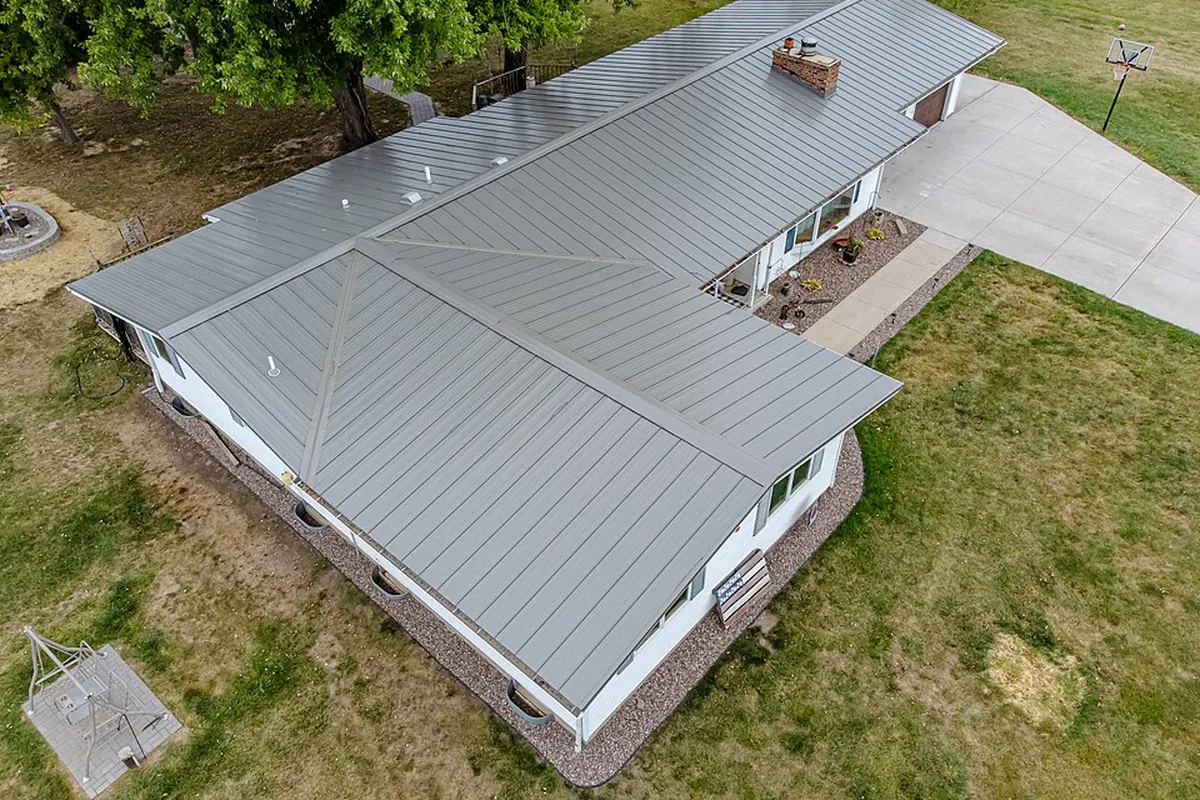
The pitch factor
A sloped roof has more surface than the ground it covers. The factor is √(1 + (rise ÷ 12)²): roughly 1.118 at 6/12, 1.158 at 7/12 and 1.414 at 12/12. Multiply the footprint (including overhangs) by that factor and divide by 100 to get squares.
Comparing against the carrier’s estimate
- Find the roof section and note total squares and the waste percentage used.
- A difference of more than about 5–10% from your own figure deserves a closer look at the measurements.
- Check for steep charges at steeper pitches and high-roof charges on two-story sections.
- Look for starter, ridge cap, drip edge, valley metal and underlayment as their own lines.
When a footprint isn’t enough
Roofs with several pitches, dormers or turrets — common on Lowcountry and Upstate custom homes — need to be measured plane by plane, from an aerial report or by hand. Use this as a sanity check, not as the measurement of record.
Questions about this tool
What is a roofing square?
One hundred square feet of roof surface. Many single-family homes fall somewhere between 20 and 45 squares.
Why does waste vary?
Hips, valleys and dormers mean more cutting, so more material ends up as scrap.