Local claim risks
- Hurricane wind
- Storm surge & tidal flooding
- Wind-driven rain
- Live-oak limb fall
- Earthquake (if endorsed)
Housing mix
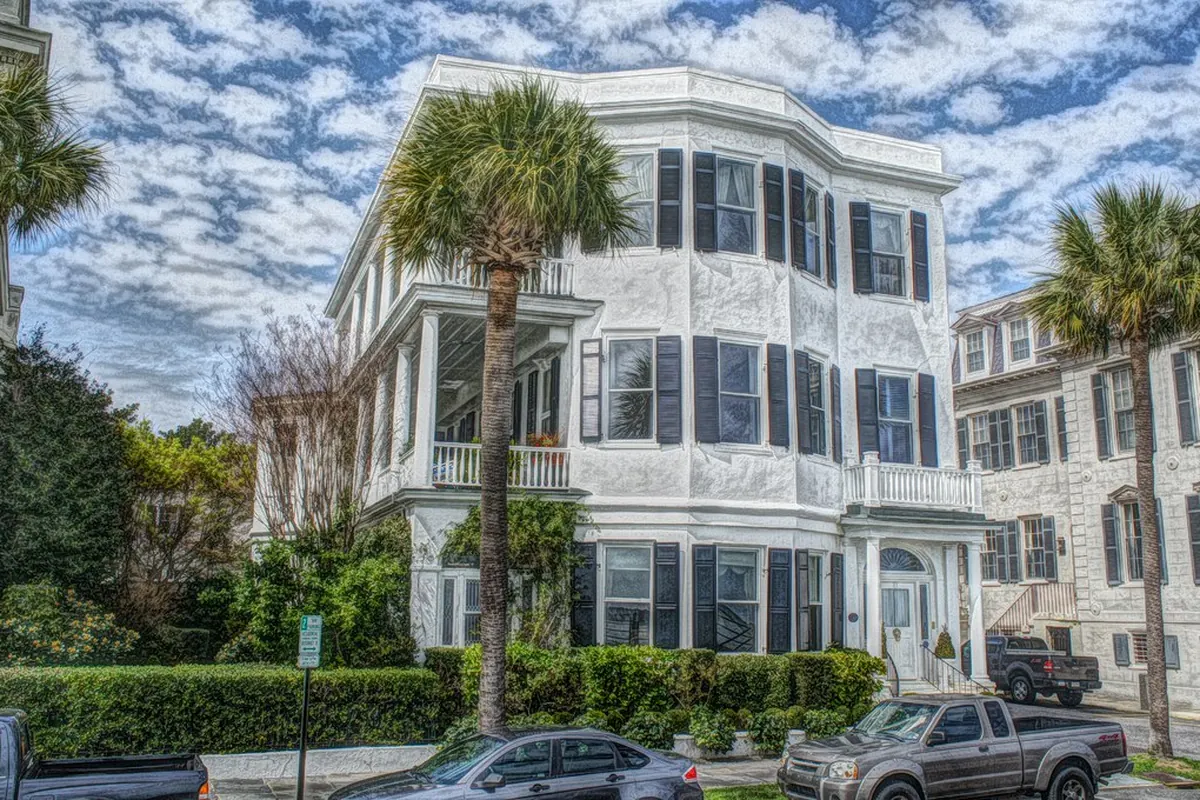
Charleston single houses with side piazzas, stuccoed masonry and wood-frame homes downtown give way to mid-century ranches in West Ashley and newer elevated and slab-built homes on the islands.
Storm history
- 1989 · Hurricane Hugo — Category 4 landfall near Sullivan’s Island; widespread roof and surge damage
- 2016 · Hurricane Matthew — downed trees, power loss and flooding across the peninsula
- 2017 · Hurricane Irma — storm surge pushed water into downtown streets
- 2023 · Hurricane Idalia — tidal flooding on the peninsula and low-lying islands
Neighborhoods we cover
South of Broad, Ansonborough, Harleston Village, Wagener Terrace, West Ashley, James Island, Daniel Island, Elliotborough
Why Charleston claims rarely fit a standard estimate
A carrier’s estimating software is built around typical construction. Much of downtown Charleston is anything but typical. A single house south of Broad may have a standing-seam or slate roof, two tiers of piazzas with beadboard ceilings, heart-pine floors, lime-based stucco over brick and hand-run plaster cornices. When a storm damages that kind of building, a line item for “drywall, ½ inch” or “paint exterior siding” does not describe the repair.
The Board of Architectural Review adds another layer. In the districts it oversees, exterior changes visible from the street generally need approval, and the board can expect in-kind materials rather than the cheapest substitute. If your policy includes ordinance or law coverage, some of that added cost may be payable up to the limit you bought. If it does not, the gap becomes a negotiation. Either way, the repair scope has to reflect what the city will actually let you build.
Elevation matters just as much. Large parts of the peninsula, James Island and West Ashley sit low, and tidal flooding now arrives on sunny days as well as in storms. That puts a lot of Charleston property in a special flood hazard area, which means two or three policies may be in play on one loss: a homeowners policy, a flood policy and, in some coastal areas, a separate wind policy from the South Carolina Wind and Hail Underwriting Association.
How the storm record shows up in today’s claims
Hurricane Hugo made landfall near Sullivan’s Island in September 1989 as a Category 4 storm, and its effects are still visible in Charleston’s building stock. Many homes were reroofed or rebuilt in the early 1990s, so carriers sometimes argue that damaged roofs or framing from that era were already near the end of their lives. Irma in 2017 and Idalia in 2023 were very different events: modest wind, but water in the streets. Those storms produce the classic Charleston argument over whether damage came from wind-driven rain, which a homeowners or wind policy may cover, or from rising water, which only a flood policy covers.
Our guide to wind pool claims and appraisal explains how split policies interact when both carriers point at each other.
Estimate disputes we see most often here
- Matching and continuity. Replacing one slope of a slate or metal roof, or one section of stucco, rarely produces a uniform result on a historic façade.
- Specialty trades. Plasterers, copper and slate roofers and millwork shops cost more than generic labor rates, and their availability after a storm affects price.
- Access charges. Narrow lots, tall two- and three-story elevations and steep roofs often need lifts or extra safety setup that first estimates leave out.
- Hurricane deductible triggers. Whether the percentage deductible applies depends on the policy definition and the storm’s status at the time of loss.
- Live-oak removal. Debris and tree removal sub-limits can be small next to the real cost of moving a large limb off a roof.
Documenting a Charleston loss and how we work
Photograph the outside of the building from every side before any temporary repair, including the piazzas, the roof from the street, and water lines on walls or fences. Keep any correspondence with the Board of Architectural Review or city staff, because it supports material and method choices. If you have old photos or a preservation easement file showing original details, set them aside.
When we take an assignment, we inspect in person, measure the building ourselves and build an independent estimate rather than marking up the carrier’s. If the dispute is about scope and price, appraisal may resolve it. If it is really about coverage or a denial, we will say so, and suggest talking to a South Carolina attorney. You can read more about our hurricane claim appraisal work.
Services in Charleston
Every South Carolina Insurance Appraiser service is available in Charleston and the surrounding area, including:
- Appraisal Demand Representation
- Home Insurance Appraisal
- Commercial & HOA Appraisal
- Roof & Hail Damage Appraisal
- Wind & Tornado Claim Appraisal
- Hurricane Claim Appraisal
- Water Damage Claim Appraisal
- Fire & Smoke Damage Appraisal
Charleston claim questions
Will my insurer pay for the materials the Board of Architectural Review requires?
It depends on your policy. Ordinance or law coverage, if you have it, may pay some of the added cost of meeting local requirements up to its limit. We separate those costs in the estimate so they can be reviewed on their own.
I have a wind policy and a homeowners policy. Who handles what?
In parts of coastal Charleston County, wind and hail may be insured by the South Carolina Wind and Hail Underwriting Association while a homeowners policy covers other perils and flood is separate. We help sort damage by cause so each carrier sees its portion.
Can appraisal settle a flood-versus-wind argument?
Sometimes it can value each part of the damage, but whether a peril is covered is a coverage question. If a carrier has denied part of the claim on coverage grounds, ask a South Carolina attorney before relying on appraisal alone.